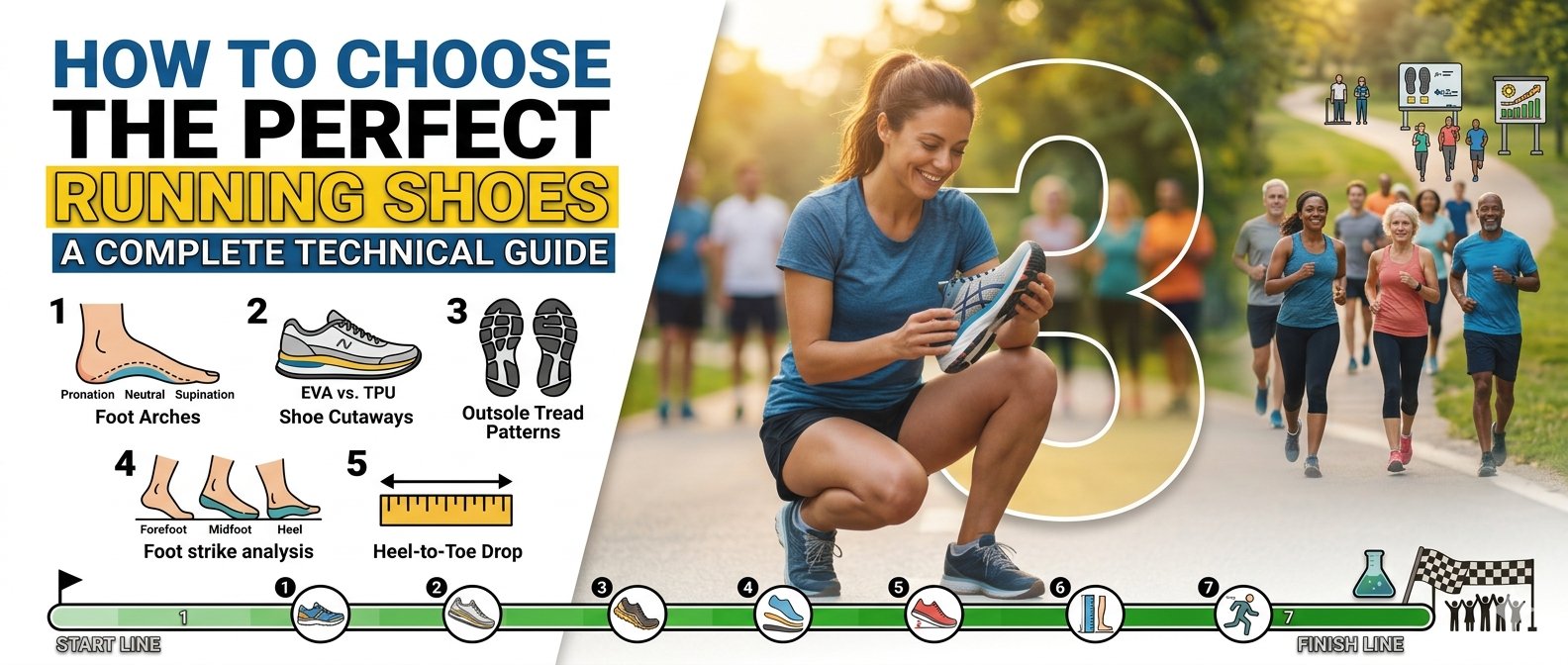
Walk into any modern sports retailer or browse an online fitness store, and you will be met with hundreds of different running shoe options, displaying bright neon designs and complex marketing terms. It is easy to select a shoe simply because it looks beautiful, matches your favorite outfit, or carries a famous brand name.
However, your running shoes are the single most important piece of protective equipment you own. Wearing the wrong shoe throws off your entire bodily alignment, sending harmful shock waves up into your shins, knees, hips, and lower back. This comprehensive technical guide clears the confusion, teaching you exactly how to find the perfect footwear matching your body's unique mechanics.
1. The Wet Test: Identify Your Arch Architecture
Human feet are unique structural frameworks, generally categorized into three distinct types based on the height of the bottom arch. You can easily discover your arch architecture at home by performing the simple Wet Test. Wet the bottom of your bare foot and step firmly onto a dry sheet of dark construction paper or a flat concrete floor, then examine the damp footprint left behind.
The Three Structural Foot Formats
1. Flat Feet (Low Arch): If your footprint looks like a complete, solid block showing the entire bottom of your foot, you have flat feet. Flat feet tend to roll inward excessively during a stride, a movement known as overpronation.
2. Normal Feet (Medium Arch): If your print shows a distinct, curved cut-out along the inside middle section, your foot structure is perfectly balanced and neutral.
3. High Arch: If your footprint shows only your heel and the front ball of your foot connected by a very thin line on the outer edge, you have high arches. High arches are rigid and do not absorb ground shock waves well.
2. Decode Your Biomechanical Pronation Pattern
Pronation refers to the natural inward rolling motion of your ankle as your foot strikes the ground to distribute the heavy forces of impact. Understanding your pronation profile tells you exactly what category of shoe architecture you require.
- The Overpronation Solution: If your ankles roll inward aggressively, your arch collapses completely under pressure. This requires a specialized Stability Shoe. These shoes feature dense foam inserts along the inside wall of the midsole, acting as a structural brace to stop the foot from rolling too far inward.
- The Neutral Solution: If your foot moves through a balanced transition, you can wear a Neutral Shoe. These shoes offer uniform cushioning throughout the entire sole without heavy structural alterations, allowing your foot to move naturally.
- The Supination Solution: If your feet stay locked on the outer edges, your body lacks natural shock absorption. You require a highly flexible, heavily Cushioned Shoe packed with soft premium foams to take the load off your joints.
3. Selecting Your Ideal Midsole Cushioning Density
The midsole is the thick layer of engineered foam situated between the upper fabric and the hard rubber outsole. Footwear manufacturers use advanced chemical foams to balance comfort and speed.
- Maximal Cushioning: These shoes feature exceptionally thick, plush foam stacks. They look massive but feel like running on soft clouds. Maximal shoes are ideal for long-distance marathon training and recovery runs, as they reduce joint soreness.
- Moderate Cushioning: The golden middle ground. These shoes provide a balanced blend of plush impact absorption and firm responsiveness. They are the perfect choice for everyday training runs and 5K to 10K events.
- Minimal Cushioning: These shoes feature very thin midsoles with zero complex technologies. They mimic the experience of running completely barefoot, forcing your foot muscles to take all the load. They are preferred by experienced athletes looking to perfect their natural running form.
4. Crucial Guidelines for Your Fitting Session
Once you have identified your arch type and cushioning preference, keep these operational rules in mind before making your final purchase:
- Shop Late in the Afternoon: Your feet naturally swell and expand throughout the day as you walk around. This mimics the exact expansion that happens during a tough running session. Trying on shoes in the evening ensures you never buy a pair that is too tight.
- The Thumb's Width Space Requirement: Never buy a running shoe that fits perfectly flush against your toes. When standing completely upright, there must be a full thumb's width of free space between your longest toe and the very front edge of the shoe. This gives your foot room to slide forward when running down hills, preventing painful black toenails.
- Bring Your Athletic Socks: Always try on new shoes using the exact technical socks you plan to wear during your training sessions. Trying on shoes with thin dress socks or thick winter socks will result in a completely incorrect fit.
Remember that an excellent running shoe typically loses its protective cushioning properties and mechanical foam integrity after 600 to 800 kilometers of road use. Keep track of your shoe's mileage inside your training log, and replace them promptly to keep your body bulletproof against injury.
 Back to Blog