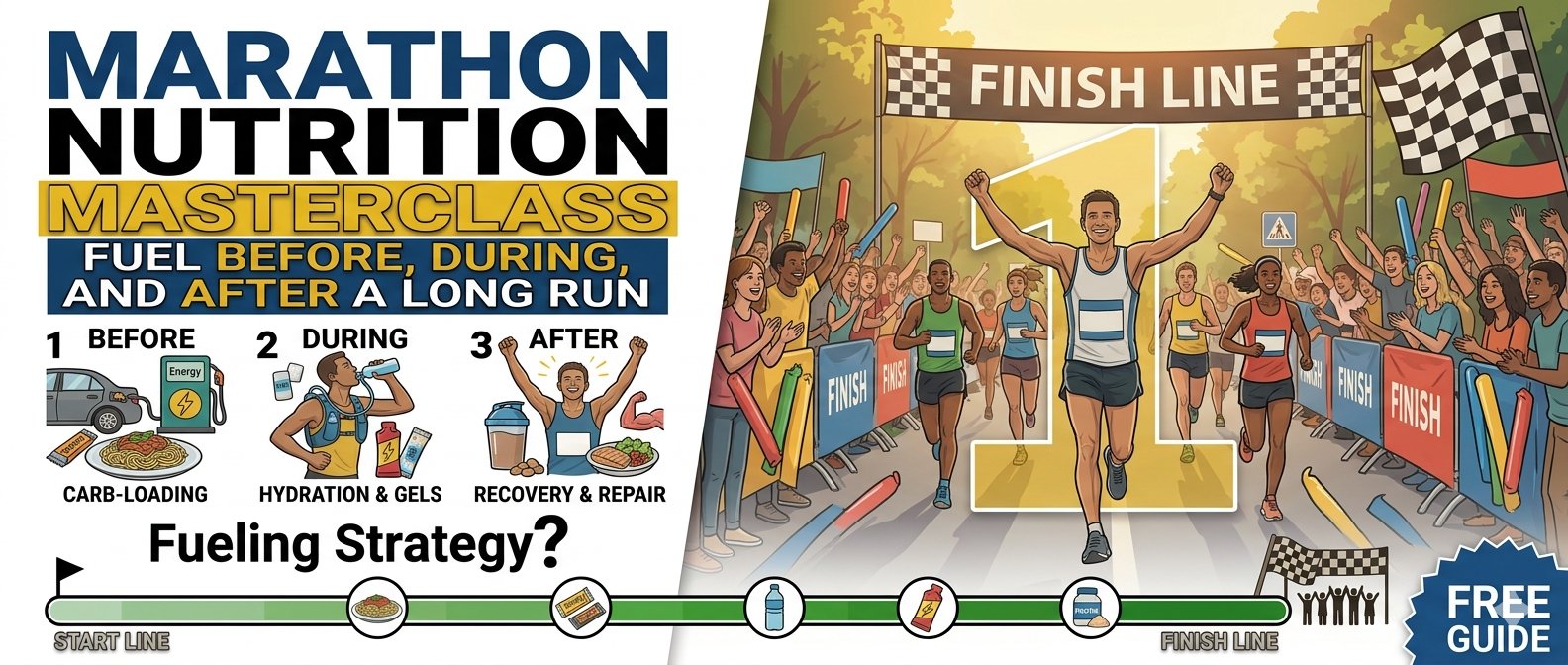
You can spend months building an incredibly powerful heart, expanding your lung capacity, and strengthening your leg muscles, but if you fail to manage your nutrition correctly, your marathon dreams will fall apart on race day. Running long distances transforms your body into a high-performance chemical engine that requires premium, clean fuel to keep moving forward.
The human body can only store a highly limited amount of glycogen—the clean-burning carbohydrate fuel stored inside your muscles and liver. For most individuals, these internal fuel tanks run completely dry after roughly 90 minutes of continuous running. When your glycogen hits zero, your metabolism crashes, your brain panics, and your pace drops instantly. This devastating physical wall can be easily bypassed by mastering the science of endurance sports nutrition.
1. The Fine Art of Scientific Carbohydrate Loading
Carbohydrate loading is a deliberate dietary protocol executed during the final 72 hours leading up to a long endurance race. It is designed to fully saturate your body's internal glycogen storage bays so you start the race with maximum fuel capacity.
- The Strategy: Do not simply eat massive plates of greasy pizza or heavy, cream-based pasta dishes. Instead, significantly increase your daily intake of clean, simple, low-fiber carbohydrates while lowering your protein and fat intake. Aim for 8 to 10 grams of carbohydrates per kilogram of body weight during this short window.
- The Best Carb Sources: Focus your meals on white rice, baked sweet potatoes, plain oatmeal, white bagels with fruit jam, graham crackers, and high-quality sports drinks.
- The Water Accumulation Factor: Do not panic if you see your weight increase by one or two kilograms during these three days. For every single gram of glycogen your body stores, it naturally binds three grams of clean water. This is a positive sign that your muscle tissue is fully fueled and hydrated for the race.
2. The Ideal Pre-Run Breakfast Blueprint
Waking up and heading straight out the door to run a long distance on a completely empty stomach is a recipe for physical disaster. Your liver glycogen stores drop significantly overnight to keep your brain functioning while you sleep. You must replenish this fuel before hitting the start line.
Pre-Run Nutrition Schedule
| Timing | What to Eat | Why it Works |
| :--- | :--- | :--- |
| 3 Hours Before | Large bowl of oatmeal with sliced banana and honey | Slow-release carbs to stabilize blood sugar levels. |
| 1 Hour Before | One slice of white toast with a thin layer of peanut butter | Fast-acting energy that won't upset your stomach. |
| 15 Minutes Before | One technical energy gel with a few sips of plain water | Primes your blood glucose for immediate movement. |
Avoid consuming high-fiber foods like broccoli, beans, or full dairy products on race morning. Fiber slows down digestion, which can cause intense stomach cramps, bloating, and urgent bathroom emergencies while running.
3. In-Race Fueling: The Power of Energy Gels
Once you cross the starting line and begin running for hours, your primary goal is to actively protect your remaining glycogen stores by consuming outside carbohydrates.
Modern sports science recommends consuming between 60 and 90 grams of fast-acting carbohydrates for every hour you spend out on the course. This target can be easily met by consuming one standard energy gel every 30 minutes.
Always look for energy gels that utilize a specific blend of maltodextrin and fructose. These two sugars use entirely different pathways in your gut, allowing your body to process a high volume of carbohydrates per hour without causing stomach distress. Crucially, always wash an energy gel down with a few swallows of plain water from the aid stations. Never swallow a gel dry or mix it with a sugary sports drink, as this creates a highly concentrated sugar paste in your stomach that causes nausea.
4. Advanced Hydration and Electrolyte Management
Dehydration lowers your total blood volume, making your blood thicker and forcing your heart to pump much faster to deliver oxygen to your working muscles. This raises your heart rate and quickly drains your energy reserves.
However, drinking massive amounts of plain water on the course can dilute your body's sodium levels, a highly dangerous medical condition known as Hyponatremia. To stay safe, you must balance your hydration using proper minerals:
- The Sodium Rule: For any run lasting longer than 60 minutes, skip plain water and drink an electrolyte solution containing at least 500-700mg of sodium per liter of fluid.
- Sip, Don't Chug: Do not throw an entire cup of water down your throat at a water station. Take small, controlled sips every 2 to 3 kilometers to allow your body to absorb the fluid smoothly.
- Check Your Sweating Style: If your skin feels rough, grainy, or your dark running clothes develop white streaks after a run, you are a heavy salt sweater. You need to consume extra salt capsules to prevent muscle cramps.
5. The Golden Window of Post-Run Recovery Nutrition
Your long run does not truly end when you cross the finish line; it ends when your body is fully repaired and recovered. Within 30 to 45 minutes of finishing your run, your muscle cells are highly sensitive and ready to absorb fresh nutrients. This period is known as the optimal recovery window.
Immediately consume a recovery beverage containing a structured 3:1 ratio of simple carbohydrates to fast-digesting protein. The carbohydrates quickly refill your empty glycogen tanks, while the protein halts muscle fiber breakdown and starts the tissue repair process. Excellent post-run recovery options include a high-quality whey protein shake blended with a ripe banana, a large glass of low-fat chocolate milk, or a solid meal consisting of grilled chicken breast with white rice and steamed vegetables. By prioritizing your recovery nutrition, you eliminate deep muscle soreness and ensure your body bounces back stronger for your next workout.
 Back to Blog