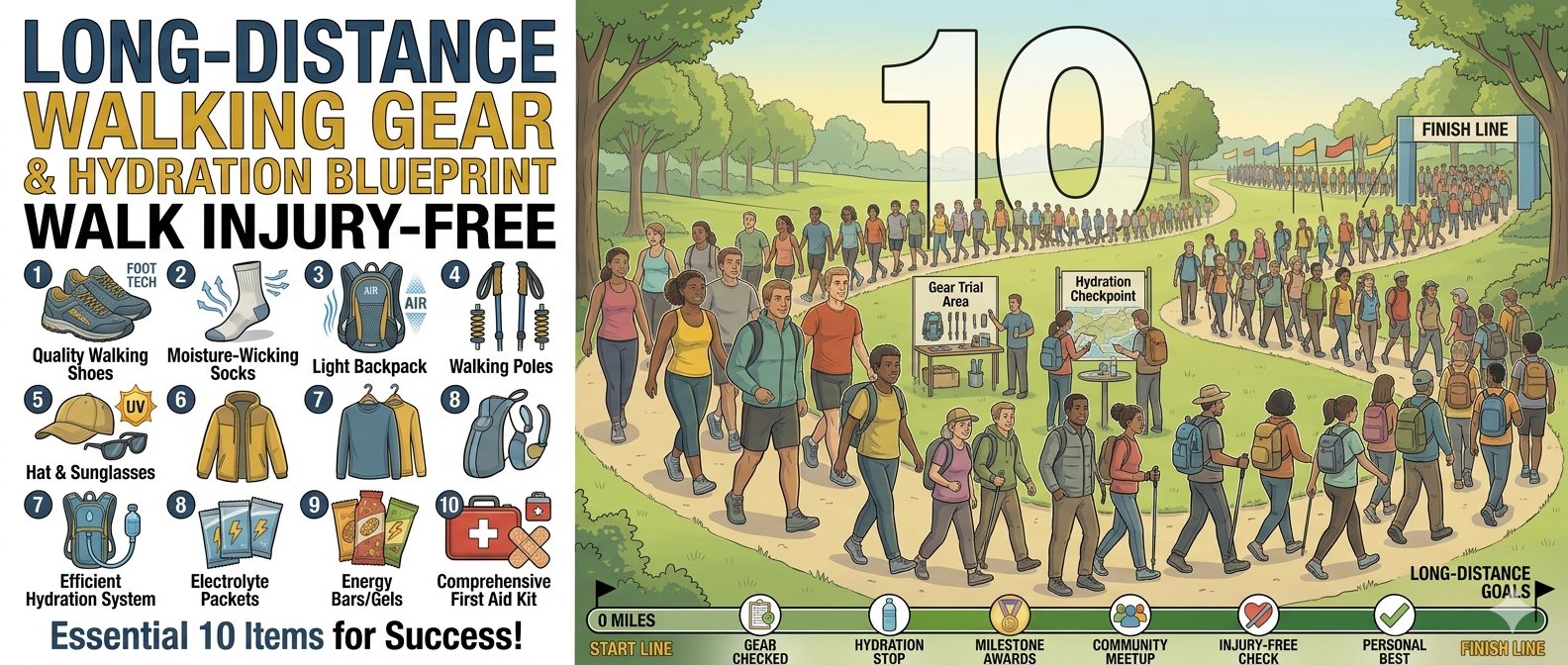
When fitness enthusiasts plan to step out for a massive long-distance walk—covering anywhere from ten to twenty kilometers in a single training session—they frequently make the mistake of failing to prepare. Because walking is an activity we perform every single day, it is easy to assume that embarking on a multi-hour endurance walk requires zero technical planning. This lack of preparation quickly catches up to you out on the path, transforming an enjoyable workout into a painful struggle marked by bleeding heel blisters, severe muscle cramps, and extreme dehydration.
Long-distance walking is an endurance sport that places unique physical stress on your body over extended periods. To perform at your absolute best, protect your muscle tissue, and walk completely injury-free, you must treat your body with the exact same respect given to a marathon runner. This means optimizing your technical footwear, selecting moisture-wicking apparel, and implementing a calculated hydration and mineral replenishment strategy. This comprehensive blueprint breaks down the exact gear and nutrition protocols required to conquer long paths with absolute comfort.
1. Technical Footwear Selection: The Anatomy of a Perfect Walking Shoe
Do not make the mistake of purchasing high-end running shoes to use for a long-distance walking routine. While both shoe styles look similar, running and walking utilize completely different biomechanical movement flows that require specific shoe architecture.
- The Heel Flexibility Requirement: Runners strike the ground with massive force, requiring highly structured, rigid midsoles. Walkers strike the ground gently on the back of the heel and need a shoe with a distinct, radiused or curved heel shape. This unique geometry allows for a smooth, rolling transition forward, preventing early strain in your shin muscles (shin splints).
- The Forefoot Flex Flex-Grooves: A high-quality walking shoe must be incredibly flexible across the ball of the foot. When you push off the ground with your toes, the shoe must bend effortlessly with your foot. If the sole is too rigid, your foot will fight the shoe with every step, causing premature arch fatigue.
- The Upper Mesh Breathability: Look for shoes wrapped in thin, lightweight engineered mesh fabrics. Avoid heavy leather or synthetic materials that trap heat inside, as a hot, sweaty foot is a prime target for severe blister growth.
2. Eliminating the Runner's Nightmare: Blister Prevention Framework
A painful, friction-induced skin blister can instantly halt a long walk, forcing you to walk with a limp and ruining your training consistency for a week. Blisters are caused by three variables: heat, sweat moisture, and continuous friction.
The Anti-Blister Action Plan
- Ban Pure Cotton Socks Forever: Cotton fibers absorb sweat moisture and hold it right against your skin, softening the tissue and making it highly vulnerable to tearing. Instead, purchase technical socks woven from synthetic fibers like nylon, polyester, or premium Merino wool blends that lift moisture away from your skin.
- Apply Lubrication Pre-Walk: Before putting on your socks, apply a generous layer of specialized anti-chafing balm or cosmetic petroleum jelly directly to high-friction hot spots, specifically your heels, the outer edges of your big toes, and your pinky toes.
- Master the Heel-Lock Lacing Technique: If your heel slides up and down inside your shoe while walking, it creates constant friction. Use the extra eyelet holes at the top of your shoe to tie a structural heel lock knot, securing your ankle firmly into the shoe's heel cup.
3. The Science of Hydration: Balancing Water and Minerals
When you spend multiple hours power walking outdoors, your body continuously loses water and critical mineral electrolytes through sweat. Dehydration quickly shrinks your total blood volume, making your blood thicker and forcing your heart to beat much faster to sustain your walking speed.
To maintain optimal endurance, you cannot rely entirely on plain water. Drinking excessive amounts of plain water while sweating heavily dilutes the remaining sodium in your blood, a highly dangerous medical state known as hyponatremia. To keep your muscles firing perfectly and avoid sudden fatigue, your hydration fluid must be balanced with minerals. Always mix a dedicated electrolyte replacement powder containing sodium, potassium, and magnesium into your walking water bottles. Target consuming roughly 500ml of this electrolyte solution for every hour you spend out on the path, taking small, regular sips rather than chugging large amounts at one time.
4. Technical Apparel: Layering for Changing Weather
Long-distance walks require you to remain outdoors for multiple hours, exposing your body to shifting weather conditions, temperature changes, and wind patterns.
Avoid wearing heavy, loose denim jeans or thick cotton sweatshirts that trap sweat and cause painful skin chafing along your inner thighs and underarms. Your clothing matrix should consist of ultra-lightweight, dry-fit synthetic fabrics that breathe easily. Wear a base layer singlet to draw sweat away from your skin, and carry a compact, wind-resistant packable jacket to protect your body if the temperature suddenly drops or it begins to rain mid-walk. Furthermore, always wear a wide-brimmed athletic hat and apply premium SPF 50+ sunscreen to all exposed skin surfaces to fully protect yourself from painful sunburn damage.
5. Post-Walk Recovery and Muscle Preservation Protocols
The moment you return home from a massive 15-kilometer walk, your recovery phase opens immediately. Your muscles have performed thousands of continuous contractions and require proper care to heal without deep soreness.
Spend 5 to 10 minutes performing slow, deep static stretches focusing heavily on your hamstrings, quadriceps, hip flexors, and calf muscles. Hold each stretch for 30 seconds while breathing deeply to release deep muscle tension. Drink a large glass of water mixed with a serving of branched-chain amino acids (BCAAs) or eat a clean solid meal packed with clean protein and complex carbohydrates. This nutritional input halts muscle fiber breakdown, refills your energy reserves, and ensures your lower body bounces back incredibly fresh, strong, and fully prepared to conquer your next long path challenge.
 Back to Blog