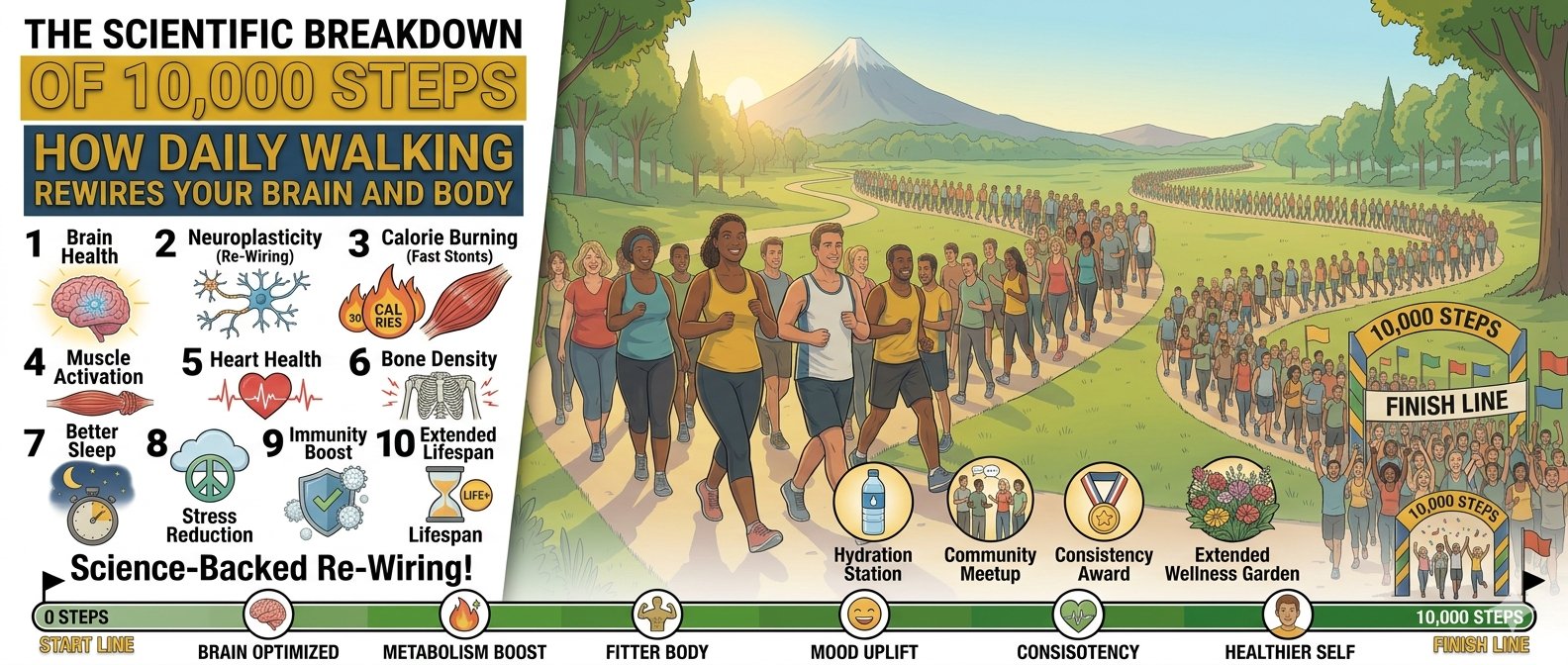
In our modern, high-tech society, the human species is living through a silent but dangerous health epidemic: chronic sedentary behavior. The majority of working professionals spend upwards of eight to ten hours every day completely glued to office chairs, staring at computer screens, and commuting in vehicles. This extreme lack of physical movement causes a slow breakdown of our biological systems, directly leading to rising global rates of metabolic syndrome, Type 2 diabetes, clinical depression, and deadly cardiovascular events.
The solution to this global health crisis does not require you to perform complex, punishing exercise regimens. Modern medical science continuously demonstrates that the simple act of logging 10,000 steps a day functions as a powerful biological reset button for the entire human machine. Walking is the absolute movement pattern our bodies evolved to perform over millions of years. When you systematically satisfy this daily movement requirement, you trigger a cascade of highly beneficial physiological and neurological shifts that completely optimize your health. In this comprehensive scientific review, we break down exactly how daily walking rewires your body from head to toe.
1. Cardiovascular Optimization: Strengthening the Human Pump
Your heart is a muscular engine that requires continuous physical work to preserve its long-term elasticity and pumping power. Sitting all day causes blood to pool in your lower extremities, forcing your heart to work much harder to maintain blood circulation.
When you walk 10,000 steps throughout the day, your calf muscles act as a secondary circulatory pump, squeezing your veins to propel blood smoothly back up to your chest cavity. This active contraction significantly reduces blood pressure, lowers dangerous LDL cholesterol levels, and expands the flexibility of your arterial walls. Clinical studies consistently prove that hitting this daily walking target slashes your lifetime risk of facing a stroke or a sudden heart attack by an astonishing forty to fifty percent.
2. Metabolic Control: Eliminating Blood Sugar Spikes
Every single time you consume a meal rich in carbohydrates, glucose rushes into your bloodstream. If you remain completely stationary after eating, your pancreas is forced to release massive surges of insulin to clear that sugar, eventually leading to chronic insulin resistance and Type 2 diabetes.
When you step out for a walk shortly after eating, a beautiful biological mechanism occurs. Your contracting leg muscles pull glucose directly out of your bloodstream to use as instant energy without requiring any insulin from your pancreas. This immediate clearing completely flattens post-meal blood sugar spikes, protects your blood vessels from oxidative damage, and drastically improves your body's overall insulin sensitivity metrics over time.
3. Neurological Rewiring: The Neurochemistry of Walking
The deep health benefits of walking expand far beyond your physical organs; walking alters the chemical landscape of your brain, functioning as a powerful tool to fight daily stress and anxiety.
- The Cortisol Flush: When you take a sustained walk through an outdoor environment, your brain immediately suppresses the overproduction of stress hormones like cortisol and adrenaline. This shifts your nervous system out of fight-or-flight panic mode and moves it directly into the calm rest-and-digest parasympathetic zone.
- The BDNF Surge: Walking triggers the rapid release of Brain-Derived Neurotrophic Factor (BDNF). This protein acts like an elite fertilizer for your brain cells, actively building fresh neural connections inside your hippocampus—the specific sector responsible for advanced memory, learning capacity, and emotional balance.
- The Dopamine Spark: Ever wonder why you get your absolute best creative ideas while walking? Movement releases a continuous stream of dopamine and serotonin, breaking mental blocks and elevating your daily mood levels naturally.
4. Joint Health and Bone Density Maintenance
Many people believe that to protect weak, aging joints, they must completely avoid movement. This is a false concept that actually worsens joint degeneration.
Your joint cartilage contains zero direct blood vessels; it receives all its life-sustaining oxygen and nutrients through a process called joint lubrication fluid exchange. When you take steps, the compression and decompression of your knee and hip joints pumps fresh synovial fluid throughout the joint space, cleaning out metabolic waste products and lowering chronic arthritis pain. Furthermore, the light, repetitive weight-bearing impact forces of walking signal your bones to absorb calcium more aggressively, building high bone mineral density to fully safeguard your skeleton against osteoporosis as you age.
5. Long-Term Longevity and Cellular Vitality
At a cellular level, daily movement actively preserves the length of your telomeres—the protective caps situated at the ends of your DNA strands that dictate exactly how fast your cells age. Hitting 10,000 daily steps is a powerful habit that systematically lowers markers of chronic systemic inflammation throughout your entire body. By making daily walking a non-negotiable pillar of your lifestyle, you are quite literally extending your lifespan, protecting your cognitive brilliance, and ensuring your body remains independent, mobile, and fully vibrant for decades to come.
 Back to Blog