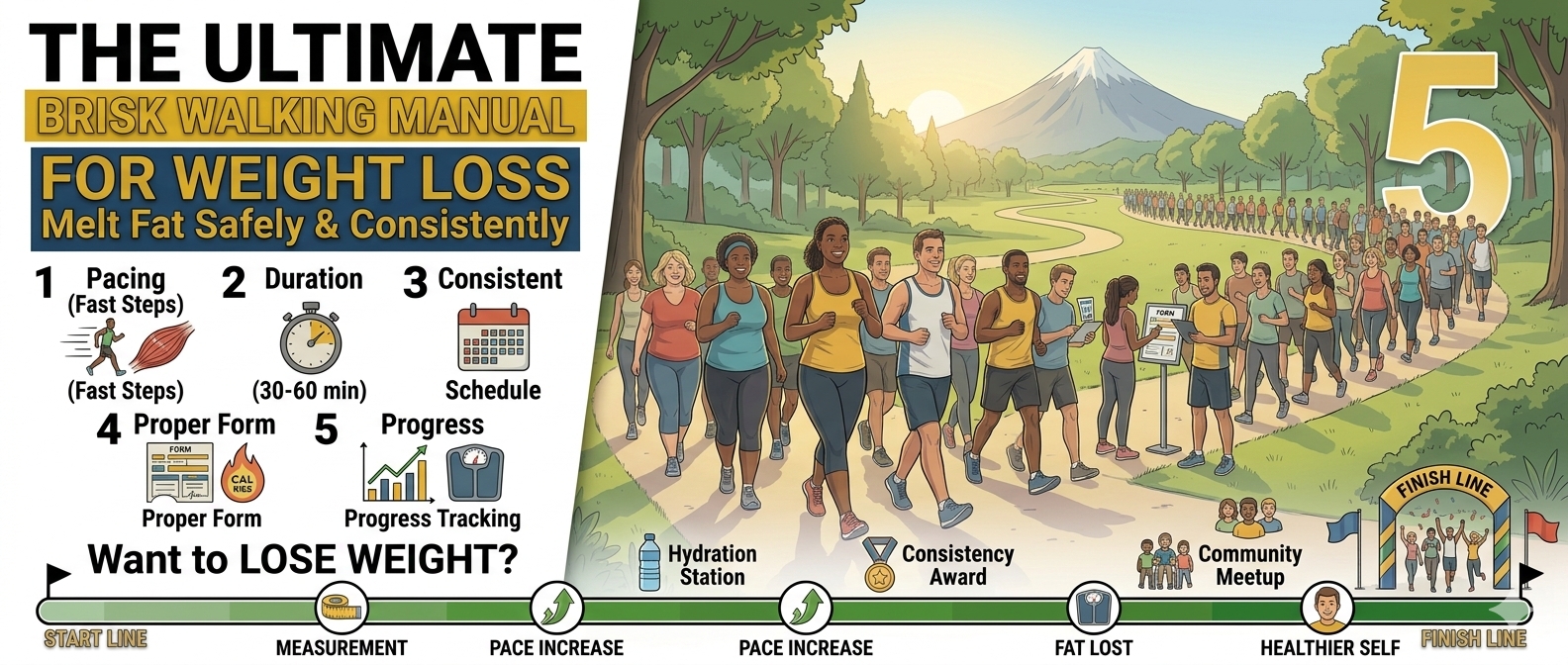
When people embark on a personal mission to shed stubborn body fat, build metabolic health, and transform their physical silhouette, they almost always assume they must subject themselves to extreme physical torment. They immediately register for expensive gym memberships, force themselves to perform grueling high-intensity interval training, or attempt long-distance running before their joints, bones, and muscles are structurally prepared to handle the load. This aggressive, unscientific approach almost universally results in chronic physical exhaustion, mental burnout, and painful injuries to the lower back, knees, and ankles.
What if the single most effective, highly sustainable, and scientifically validated fat-burning tool available to human beings was a biological movement pattern we perform every single day? Walking—specifically intentional, structured Brisk Walking—is an incredibly potent, low-impact exercise method that can completely rewrite your physical health parameters. Unlike running, where both feet leave the ground simultaneously and create severe joint impact forces upon landing, walking keeps one foot anchored to the floor at all times. This drastically cuts joint stress while keeping your heart rate inside the premium fat-oxidation zone for hours. In this extensive master manual, we break down every single micro-detail required to turn a standard walk into a highly structured fat-melting machine.
1. The Energetic Mathematics: Decoding the Fat-Burning Zone
To effectively lose weight through walking, you cannot simply stroll lazily through a park while looking at your smartphone. Your body relies on different chemical fuel sources depending heavily on the intensity of your movement.
- The Low-Intensity Trap: If your movement is too slow and your heart rate stays near your resting state, your total caloric expenditure remains too low to trigger significant weight loss over time.
- The High-Intensity Switch: Conversely, if you push yourself into an intense sprint, your metabolism immediately shifts away from burning fat and begins burning highly limited carbohydrate glycogen stores instead.
- The Sweet Spot (Zone 2 Aerobic Fat Oxidation): Brisk walking allows you to maintain your heart rate precisely within 60% to 70% of your maximum heart rate limit. In this premium zone, your body optimizes its biochemistry to continuously pull energy directly from stored adipose tissue. This means you are burning pure body fat as fuel for every extra minute you remain on the path.
2. Biomechanical Form Mastery: Walking with Mechanical Power
To maximize your caloric burn and protect your spinal column from unnecessary strain, you must move with absolute mechanical intent. Walking with poor posture creates immediate inefficiencies that slow down your pace and tire out your muscles prematurely.
- The Alignment Anchor: Keep your chin fully parallel to the floor and lock your eyes onto the path 10 to 15 meters directly ahead of you. Never stare down continuously at your feet or your phone, as dropping your head forwards places intense strain on your cervical spine and compromises your lung expansion capacity.
- The Swing Mechanism: Bend your elbows at a strict 90-degree angle and swing your arms actively forward and back from your shoulders like a driving piston. The speed of your legs is directly connected to the speed of your arm swing; if you pump your arms faster, your feet will naturally increase their step turnover pace.
- The Core Activation Lock: Pull your belly button slightly inward toward your spine to brace your deep abdominal wall muscles. A locked core stabilizes your pelvis, preventing your lower back from arching excessively and causing dull ache cycles after a long training session.
- The Foot Roll Profile: Every single step must follow a smooth, rolling pathway. Your heel must strike the ground first, roll fluidly through the middle arch of your foot, and push off powerfully using the tips of your big toes. Never slap your foot flat against the asphalt.
3. The 6-Week Progressive Walking Matrix
To force your metabolism to continuously adapt and burn fat, you must implement a structured protocol of progressive overload. Walking the exact same distance at the exact same speed every day will eventually cause your weight loss progress to plateau.
| Training Phase | Target Speed Profile | Weekly Time Duration | Core Functional Objective |
| :--- | :--- | :--- | :--- |
| Weeks 1-2: Base Building | 4.5 to 5.0 km/h (Moderate Pace) | 30 Minutes per day, 4 days/week | Conditioning the joints and lower leg muscles. |
| Weeks 3-4: Velocity Scale | 5.5 to 6.0 km/h (Brisk Pace) | 45 Minutes per day, 5 days/week | Elevating heart rate into the true fat-burning zone. |
| Weeks 5-6: Peak Intensity | 6.5+ km/h (Power Pace) + Hills | 60 Minutes per day, 5 days/week | Maximizing daily caloric output and lung capacity. |
4. Setting Your Step Goals: The 10,000 Step Benchmark Demystified
The idea of achieving exactly 10,000 steps every single day has become a massive global fitness benchmark, but it is critical to understand the true science behind the number.
For the average adult, walking 10,000 steps covers a physical distance of roughly 7.5 to 8 kilometers, burning an extra 400 to 500 calories depending heavily on your total body weight and moving velocity. While tracking daily steps using a smartwatch or smartphone is a phenomenal way to fight a sedentary lifestyle, the true magic lies in the intensity of those steps. Logging 3,000 steps at a fast, breath-quickening brisk pace does far more for your metabolic health and weight loss goals than taking 7,000 slow, leisurely steps around your house. Aim to combine a high daily volume with at least one continuous, focused 30-minute power walk session to yield maximum body transformation results.
5. Nutritional Synergy and Hydration Directives
You can power walk for hours, but if you return home and immediately consume high-calorie junk foods, your weight loss journey will fail completely. You cannot out-walk a bad daily diet.
- The Caloric Deficit Engine: To shed weight, you must create a calculated caloric deficit, consuming slightly fewer calories than your body expends throughout the day. Pair your walking routine with whole, nutrient-dense foods like lean clean proteins, fresh cruciferous vegetables, and complex low-glycemic carbohydrates.
- Pre-Walk Hydration Architecture: Drink 300-500ml of clean water roughly one hour before your power walk session. This gives your body ample time to distribute moisture to your muscle cells, preventing premature muscle cramps and dehydration headaches.
- Post-Walk Repair: After finishing a long power walk, consume a light, clean snack focusing on high-quality protein to support lean muscle maintenance. Remember, preserving lean muscle mass while burning fat is the ultimate secret to building a fast, highly efficient metabolism for life.
 Back to Blog